
Feltham, England · Tyre Care Guide
One tyre looks noticeably more worn than the other three, and you have no idea whether that is normal or a warning sign.
What this guide covers
Key Takeaways
- Uneven tyre wear almost always points to one of three causes: incorrect pressure, misalignment, or a suspension or balance issue.
- Centre wear usually means overinflation, wear on both edges usually means underinflation, and wear on one edge only points to alignment or camber.
- Different tyres on the same axle wearing at different rates is worth investigating, not just a coincidence.
- An asymmetric tyre’s tread pattern is a deliberate design choice. Asymmetric wear across your tyres is not, and is worth checking.
- Left unaddressed, uneven wear reduces grip, increases braking distance and can lead to an MOT failure.
You walk past your car and something looks off. One tyre has a patch worn smoother than the rest, or the edges look thinner than the middle. It is easy to shrug this off as normal ageing, but tyres are not supposed to wear like this.
Uneven tyre wear is not random. Whatever pattern has appeared on your tread is a fairly reliable clue about what is actually going on with your car, whether that is tyre pressure, wheel alignment, or something in the suspension.
This guide breaks down what uneven tyre wear actually means, what typically causes it, and how to tell the difference between outer edge wear and inner edge wear before it costs you a tyre unnecessarily.
None of this requires specialist knowledge to spot early. A quick visual check every few weeks, alongside your regular pressure check, is usually enough to catch a developing pattern before it eats into your tread depth.
Uneven Tyre Wear: What It Actually Means and Why It Matters
Normal tyre wear happens gradually and evenly across the whole tread. Uneven tyre wear is when one part of the tyre, the centre, an edge, or a patchy section, wears down noticeably faster than the rest.
Why a Worn Patch Is Never Just Cosmetic
A tyre wearing unevenly loses grip faster than the tread depth alone suggests, particularly in the wet, since the worn section has less rubber left to channel water away. It also increases braking distance and can shorten the tyre’s usable life dramatically compared with a tyre wearing evenly.
It matters for your MOT too. A tester checking tread depth measures across the central three quarters of the tyre, as set out in the GOV.UK MOT inspection manual, so a tyre that looks fine at a glance can still be borderline or failing once the wear pattern is properly checked.
Uneven wear also tends to be self-reinforcing. Once a tyre starts wearing more heavily on one section, that section has less rubber to work with, which puts more strain on the remaining tread and speeds up the process further. Catching it early rather than waiting for it to become obvious genuinely saves you a full replacement.
What Can Cause Uneven Tyre Wear? Reading the Pattern
The good news is that the pattern itself usually tells you what to look at first, rather than leaving you guessing.
Reading an Uneven Wear Pattern
What the location of the wear usually points to
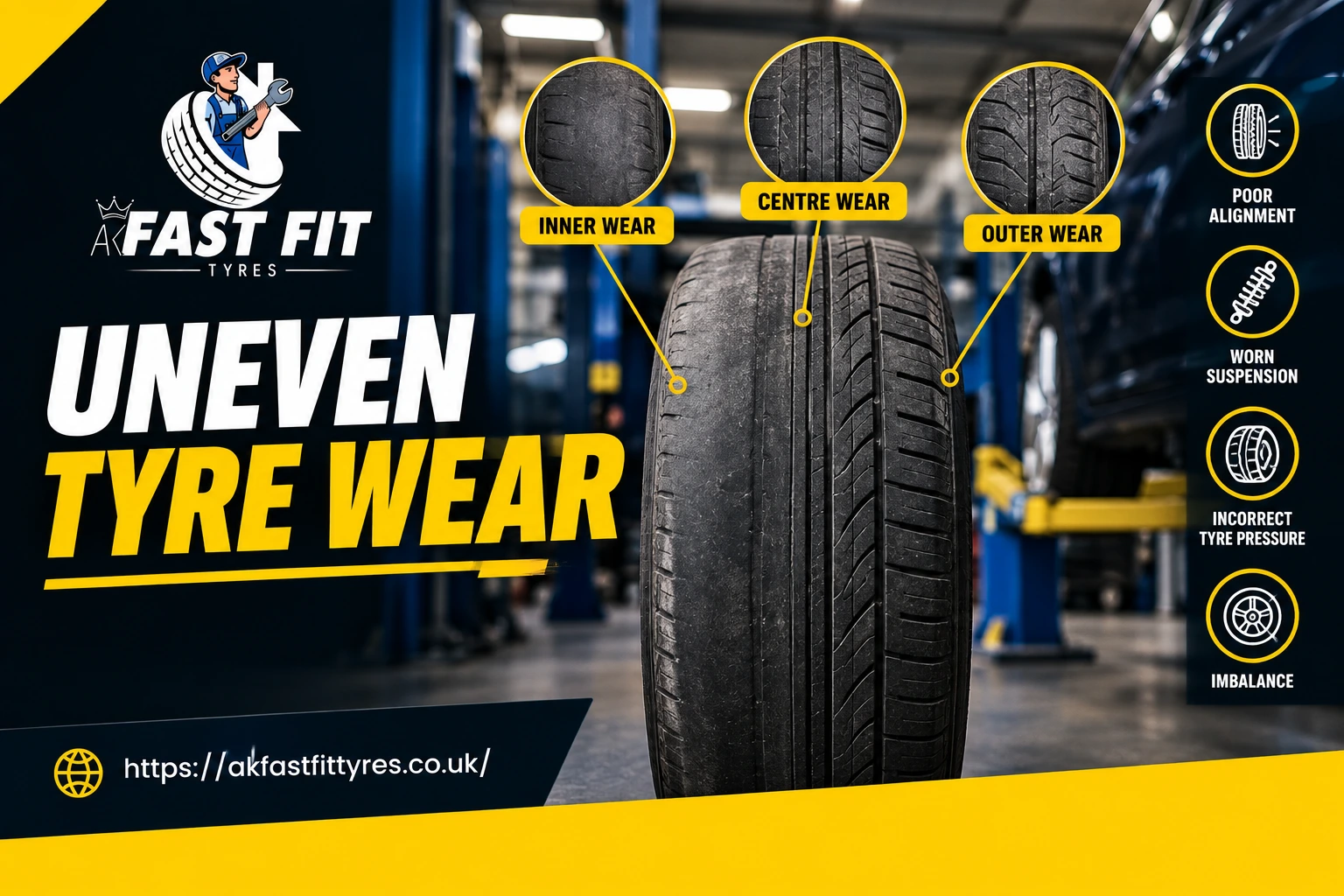
Centre Wear
Usually a sign of overinflation, since the tyre bulges and only the middle contacts the road.
Both Edges Worn
Usually a sign of underinflation, since the tyre flattens and the shoulders carry more load.
One Edge Only
Usually points to wheel alignment or camber, rather than pressure alone.
Cupping or Patchy
Often linked to worn suspension components or a wheel that is out of balance.
If you check your tyres and notice different tyres on the same axle wearing at clearly different rates, that is also worth flagging. It usually means one side of the car has an issue the other does not, rather than both tyres simply being the same age.
Topping up pressure repeatedly without asking why it keeps dropping. A tyre that needs air every few weeks has a slow puncture or a valve issue, and simply refilling it does nothing to stop the uneven wear it is already causing.
Tyre Wear on the Outer Edge vs Inner Edge: What’s the Difference
Outer edge wear usually points to underinflation, aggressive cornering, or positive camber, where the top of the wheel leans slightly outward. Inner edge wear tends to be the more urgent of the two, often linked to negative camber, incorrect toe settings, or worn suspension bushes rather than pressure alone.
It is worth clearing up a common point of confusion here. An asymmetric tyre has a tread pattern deliberately designed to differ from the inner to the outer edge, which is completely normal and by design. Asymmetric wear, where one edge has worn down faster than intended, is a different thing entirely and is exactly the fault this guide is about.
Recent kerb strikes and pothole impacts are worth mentioning specifically here, since they are one of the more common triggers for sudden one-sided wear. If your car has hit something firm recently and you notice a new pattern developing soon after, that timing is rarely a coincidence.
Run your hand across the tread, not just look at it. Inner edge wear especially can be easy to miss from a normal standing position, since the inside shoulder often faces away from view.
Getting Uneven Tyre Wear Checked in Feltham
Feltham’s mix of roundabouts, speed bumps and potholes on residential streets makes edge wear more common here than on a steady motorway commute. A kerb strike or a hard pothole hit can knock alignment out of place in an instant, even if nothing looks visibly damaged.
Our uneven tyre wear checks in Feltham cover pressure, tread pattern and a full inspection, so if you are asking what can cause uneven tyre wear on your specific car, we can tell you exactly which of the usual causes applies rather than guessing from a description alone.
If the wear pattern points to alignment rather than pressure, our guide to wheel alignment and tracking in Feltham covers what that fix actually involves and what it costs you if left unaddressed. You can read more about our team on the about us page.
Frequently Asked Questions
What causes uneven tyre wear?
Uneven tyre wear is usually caused by incorrect tyre pressure, poor wheel alignment, or worn suspension and balance issues. The exact location of the wear on the tyre, centre, edge or patchy, usually points to which of these is responsible.
What does tyre wear on the outer edge mean?
Outer edge wear typically points to underinflation, aggressive cornering, or positive camber. If both outer edges are worn, pressure is the most likely cause. If only one edge is affected, alignment is more likely.
What does tyre wear on the inner edge mean?
Inner edge wear usually points to negative camber, incorrect toe settings, or worn suspension components rather than pressure alone. It is generally the more urgent of the two edge-wear patterns and is worth having checked promptly.
Is it normal for different tyres on the same axle to wear differently?
Not usually. Tyres on the same axle should wear at broadly similar rates under normal conditions. A noticeable difference between them often points to an alignment or suspension issue affecting just one side of the car.
Does an asymmetric tyre mean uneven wear?
No. An asymmetric tyre has a tread pattern deliberately designed to differ from the inner to the outer edge, which is completely normal. Asymmetric wear, where the tyre has actually worn down unevenly, is a separate issue and is what this guide addresses.
Can uneven tyre wear fail an MOT?
Yes, if the wear has reduced tread depth below the legal limit anywhere across the central three quarters of the tyre. Uneven wear can also hide a genuine problem that would otherwise show up sooner on an evenly worn tyre.
AK Fast Fit Tyres Team
Independent Tyre & Garage Specialists, Feltham
This guide was written by our in-house team and reviewed by our head technician before publishing. Between us, we have spent over 15 years reading tyre wear patterns and diagnosing the cause for drivers across Feltham, and every recommendation here reflects what we actually see on the workshop floor each week.
- 15+ Years Local Experience
- Tyre Wear Checks Every Week
- Feltham Town Centre Garage
Notice Uneven Wear? Get It Checked Before It Costs You a Tyre
Book a tyre and pressure check with AK Fast Fit Tyres in Feltham and find out exactly what your wear pattern is telling you.
Book Your Check →