
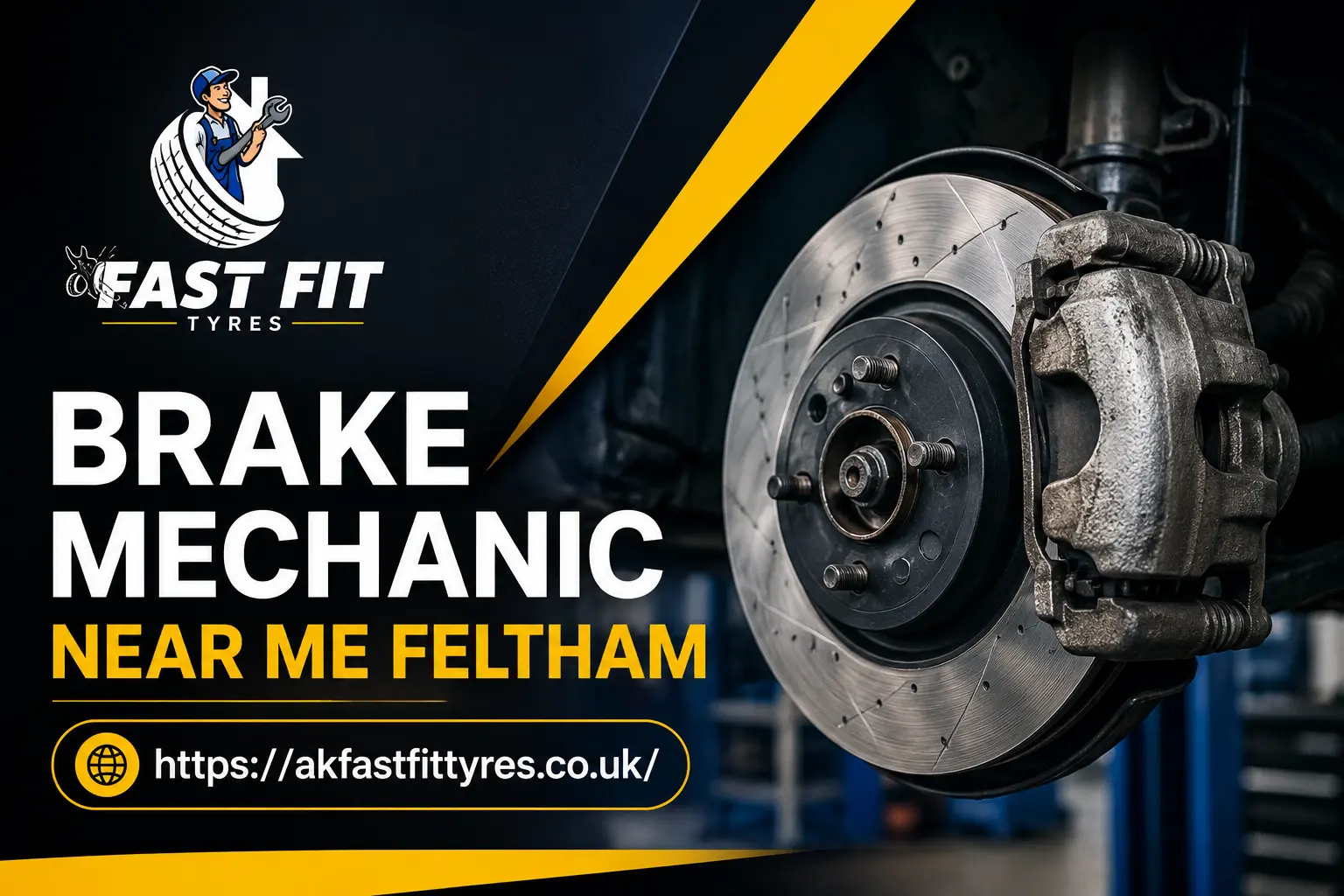
Feltham, England · Car Care Guide
That grinding sound isn’t going away on its own. Here’s how to know when it’s serious, and where to find a brake mechanic near me in Feltham who won’t keep you waiting.
What this guide covers
- Why Finding the Right Brake Mechanic Near Me in Feltham Matters
- Warning Signs Your Brakes Need Attention
- What Happens During a Brake Inspection
- Brake Pad Replacement in Feltham: What to Expect
- Brake Fluid: The Part Drivers Forget About
- Mobile Brake Mechanic vs Visiting a Garage
- Choosing a Trustworthy Brake Mechanic in Feltham
- Frequently Asked Questions
Key Takeaways
- A squeal, grind, or vibration when braking is your car telling you something needs checking, not something to wait out.
- A genuine brake mechanic near me search should lead you to a garage that inspects pads, discs, callipers and fluid together, not just one part.
- Brake fluid absorbs moisture over time and should be checked regularly, since old fluid reduces braking performance even with healthy pads.
- Mobile call-outs suit urgent single-wheel problems, while a full brake service is better done on a workshop lift.
- The clearest sign of a trustworthy garage is honest advice about what genuinely needs replacing, not what’s easiest to sell.
Brakes rarely fail out of nowhere. Long before anything serious happens, your car gives you small signals: a faint squeal when you slow down, a soft pedal that needs more pressure than usual, or a slight pull to one side as you brake. Most drivers notice these signs and put off dealing with them.
That delay is understandable. Life is busy, and a squeal that comes and goes doesn’t feel urgent, until the day it is. Braking systems wear gradually, and by the time a fault becomes obvious, the repair is often bigger and more expensive than it needed to be.
This guide explains what a proper brake check involves, what the warning signs actually mean, and how to find a brake mechanic near me in Feltham who will tell you exactly what your car needs and why. No scare tactics, no jargon, just a clear picture of how your braking system works and when to book a check.
By the end, you’ll know what questions to ask before booking, and what a fair, thorough brake inspection in Feltham should look like from start to finish.
Why Finding the Right Brake Mechanic Near Me in Feltham Matters
Your brakes are the one system on your car you rely on every single journey, often several times a minute in stop-start traffic. A mechanic who treats every brake job with real care, not just a quick pad swap, is worth seeking out.
Feltham’s proximity to busy routes towards Hounslow, Heathrow and central London means local drivers brake more often than most, especially in heavy traffic. That extra wear makes regular checks more important here than in quieter towns, and it means a local garage that understands these driving patterns can often spot a developing fault before it becomes a safety issue.
What a Genuine Brake Specialist Actually Checks
A proper inspection goes beyond looking at pad thickness. It includes the discs for scoring or warping, the callipers for sticking or leaking, the handbrake mechanism, and the fluid itself. A mechanic who explains what they found and shows you the worn parts is doing the job properly.
Ask to see your old brake pads once they’re removed. Comparing worn pad thickness against a new one makes the wear easy to understand, and a good mechanic will happily show you.
Warning Signs Your Brakes Need Attention
Your braking system usually gives clear warning before anything fails completely. Knowing what each sign means helps you judge how urgently to book a check.
Common Brake Warning Signs and How Urgent They Are
A quick guide to reading what your car is telling you
A grinding sound usually means the pads have worn down to metal and are now cutting into the disc itself, which is why it sits at the highest urgency level. Squealing on its own is often just a wear indicator doing its job, but it should still be checked within the week.
What Happens During a Brake Inspection
A brake mechanic near me in Feltham should follow a clear, repeatable process every time, whether it’s a routine check or something you’ve booked because of a specific noise.
A Standard Brake Check Visit
From arrival to driving away with confidence
A thorough check like this catches problems that a driveway glance would miss, such as a disc that has started to warp slightly or a calliper that isn’t releasing fully after braking.
It’s also worth asking whether the inspection includes the handbrake and any electronic parking brake components, since these are checked separately from the main service brakes but are just as important for safety, particularly on hills or when parking on a slope.
Brake Pad Replacement in Feltham: What to Expect
Brake pad replacement is the most common brake job, and it’s usually straightforward once your car is up on a lift. The old pads are removed, the disc surface is checked and cleaned, and new pads are fitted and bedded in with a careful road test.
Not every squeal means new pads are needed straight away. A good mechanic will measure the remaining pad thickness and tell you honestly whether you have weeks or months left, rather than pushing a replacement you don’t yet need.
| Pads Still Healthy | Pads Need Replacing | |
|---|---|---|
| Sound | Quiet or occasional light squeak | Persistent squeal or grinding |
| Pedal feel | Firm, consistent response | Soft, needs more pressure to stop |
| Visual thickness | Above roughly 3mm | Close to or below 3mm |
| Recommended action | Recheck at next service | Book a replacement soon |
Brake Pad Replacement Feltham: Getting It Right the First Time
Fitting the correct pad compound for your vehicle matters more than most drivers realise. The wrong pads can wear discs unevenly or feel spongy under braking, so it’s worth using a garage that fits parts matched to your specific make and model rather than a generic option.
Brake Fluid: The Part Drivers Forget About
Brake fluid is easy to overlook because there’s no visible wear to notice, unlike a thinning pad. But fluid absorbs moisture from the air over time, and moisture-contaminated fluid boils at a lower temperature, which can make your brakes feel spongy under hard braking, especially on long descents.
Assuming brake fluid never needs changing because it looks fine. Fluid condition can’t be judged by colour alone, since moisture contamination isn’t visible. Most manufacturers recommend a change every two years regardless of appearance.
Official GOV.UK guidance on car parts checked at an MOT confirms that brake fluid warning lights and overall braking performance are assessed as part of the test, alongside the condition of pads, discs and the handbrake. The full MOT inspection manual for brakes sets out exactly what a tester checks, which is useful reading if you want to understand what “pass” actually means for your braking system.
Mobile Brake Mechanic vs Visiting a Garage
A mobile brake mechanic in Feltham can be genuinely useful if your car has developed a sudden fault and isn’t safe to drive to a workshop, or if getting to a garage simply doesn’t fit your day. A technician comes to you and carries out the repair on site.
For anything beyond a single, clearly identified fault, though, a workshop visit gives access to a proper lift, better lighting, and the equipment needed to bleed the brake fluid system properly, something that’s far harder to do to a high standard on a driveway.
There’s also the question of diagnosis. A mobile mechanic working outdoors or in a car park has less scope to investigate an intermittent noise or a fault that only shows up under certain conditions. A workshop with a lift and proper lighting makes it far easier to trace the source of a problem accurately, rather than guessing based on the symptom alone.
Use a mobile call-out for an urgent single issue, like a seized handbrake cable. Book a garage visit for a full brake service, fluid change, or anything involving more than one wheel.
Choosing a Trustworthy Brake Mechanic in Feltham
With several garages around Feltham offering brake work, the right choice usually comes down to a few practical things: clear communication, experienced technicians, and honest advice you can trust without a second opinion.
Look for a garage that shows you the worn parts, explains the inspection findings in plain language, and never pressures you into work your car doesn’t need yet. A team experienced across brakes, MOT preparation, tyres and general servicing can handle your whole car under one roof, which saves the hassle of juggling different specialists for related jobs.
That’s the standard our team follows at AK Fast Fit Tyres’ brake pad repairs and garage services in Feltham, where every brake job includes a full inspection and a clear explanation before any work goes ahead. If you’re due a wider check-up, our guide to Feltham Tyres and Auto Centre services covers tyres, MOT prep and wheel alignment in more detail.
Frequently Asked Questions
What is a brake technician?
A brake technician is a trained mechanic who inspects, diagnoses and repairs a vehicle’s braking system, including pads, discs, callipers, fluid lines and the handbrake mechanism. They’re trained to identify wear before it affects safety and to carry out repairs to manufacturer standards.
What are the 4 main parts of a car’s brake system?
The four main parts are the brake pads, which grip the disc to slow the wheel; the discs themselves; the callipers, which press the pads against the disc; and the brake fluid, which transfers pressure from the pedal through the system. A fault in any part affects overall braking performance.
How do I know if my brake pads need replacing?
Common signs include a squealing or grinding noise, a soft or spongy pedal, longer stopping distances, or a vibration when braking. A visual check or a quick inspection at a garage can confirm the remaining pad thickness and how soon a replacement is needed.
Is it safe to drive with a brake warning light on?
It depends on which warning light is showing. A low brake fluid or ABS light should be checked as soon as possible, and if the pedal feels unusually soft or the car pulls to one side, it’s safer to have it inspected before driving further.
How often should brake fluid be changed?
Most manufacturers recommend changing brake fluid roughly every two years, regardless of how it looks, since it absorbs moisture from the air over time. Old fluid can reduce braking performance even when the pads and discs are in good condition.
Can I get a mobile brake mechanic to come to my home in Feltham?
Yes, mobile call-outs are a good option for urgent, clearly identified issues such as a single seized calliper or handbrake fault. For a full brake service or fluid change, a workshop visit gives access to better equipment and a proper lift for a thorough job.
Hearing a Noise You’re Not Sure About?
Don’t wait for a squeal to turn into a grind. Book a full brake inspection with our Feltham team today and drive with confidence.
Book Your Brake Check →